Basement waterproofing
Interior Drain Tile Installation in the North Metro
Stop water from seeping up through your basement floor and floor-to-wall joint. A local contractor installs a perimeter drain system that quietly collects water and sends it to your sump — before it ever reaches your basement.
What interior drain tile is and when you need it
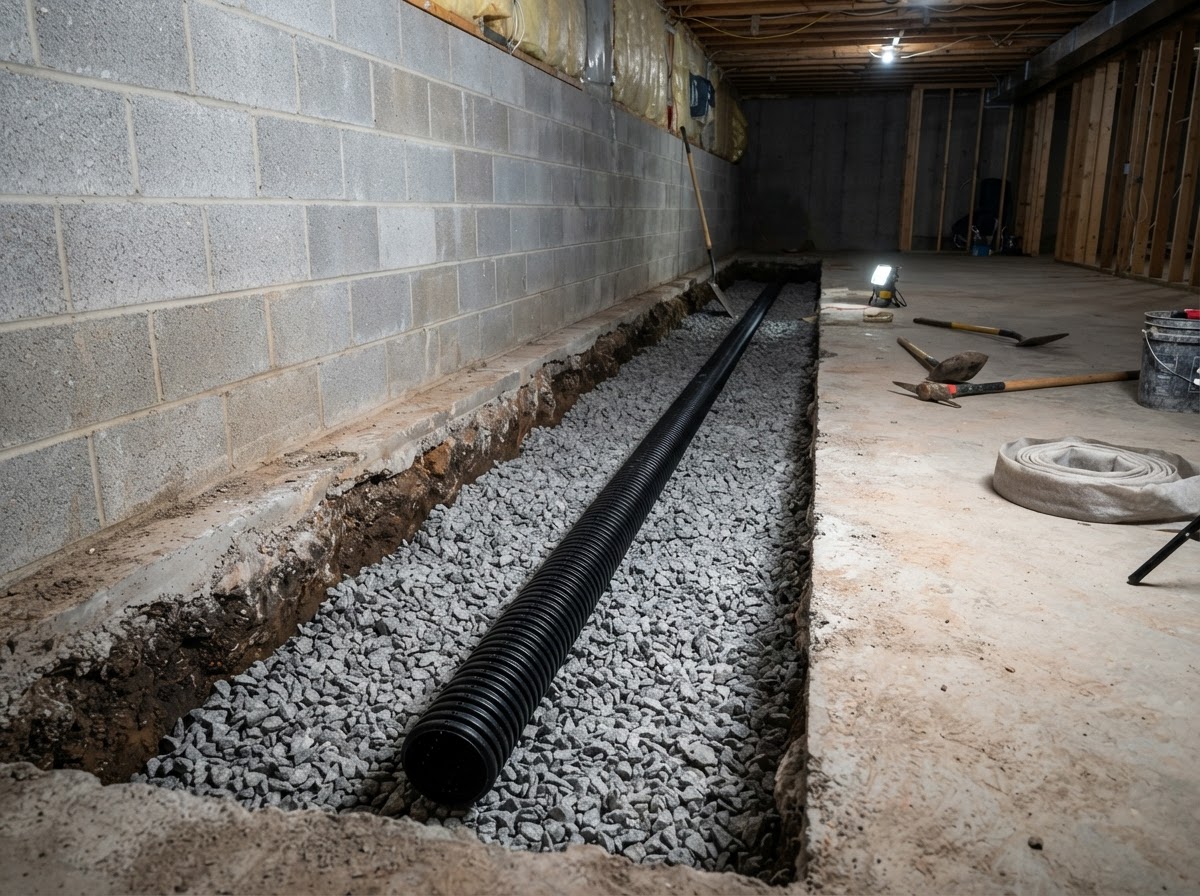
Interior drain tile — sometimes called a French drain or interior perimeter drain — is one of the most effective ways to stop a wet basement for good. The system runs along the inside edge of your basement footing, under the concrete floor, collecting water that would otherwise seep up through the floor-to-wall joint and across your slab. Instead of fighting the water, a drain tile system gives it a place to go: a perforated pipe surrounded by washed stone that carries groundwater to a sump basin, where a pump moves it safely outside and away from your foundation.
Here in the north Twin Cities, interior drain tile is one of the most common basement waterproofing fixes, and for good reason. Our spring snowmelt, heavy summer rains, and freeze-thaw cycles keep groundwater pushing against foundations month after month. In homes built from the 1960s through the 1980s — which describes a large share of Coon Rapids, Fridley, Spring Lake Park, and Brooklyn Park — the original footing drains have often failed, silted up, or were never installed at all. Once that drainage path is gone, hydrostatic pressure builds under the slab and pushes water through the first weak point it finds, usually the cove joint where the floor meets the wall.
Signs you may need interior drain tile include water seeping in along the floor-to-wall joint, dampness or efflorescence (that powdery white mineral buildup) on the lower walls or floor, a sump pump that runs constantly during wet weather, and musty odors that won't go away. If you're mopping up after every rain or spring thaw, a perimeter drain system is usually the permanent answer.
Installation typically involves removing a narrow strip of concrete floor along the perimeter, digging a trench down to the footing, laying perforated pipe in washed stone, and connecting it to a sump basin. The floor is then patched and the system is largely invisible once it's done. A good contractor works room by room and keeps the rest of your basement usable during the install. Most residential installations take a few days depending on the size of the basement and how many sump locations the home needs.
The right drain tile system is sized to your home's actual water volume and soil conditions — not a one-size-fits-all kit. A local contractor will inspect your basement, check where the water is coming in, and tell you honestly whether you need a full perimeter system, a partial system on the problem wall, or something simpler. They'll also make sure your sump pump is up to handling the water the drain tile sends its way, because the two work together.
What this includes
- Relieves hydrostatic pressure under the slab
- Channels water to a sump pump, not your floor
- Installed from the inside with minimal disruption
FAQ
Interior Drain Tile questions, answered
Does installing interior drain tile make a mess of my basement?
It does involve cutting and removing a strip of concrete along the perimeter, so there's some dust and disruption during the work. A careful contractor works section by section, contains the dust, and patches the floor when they're done, so most of the system ends up hidden under your slab. Your basement stays usable between work days.
How long does an interior drain tile system last?
A properly installed interior drain tile system with washed stone and a good sump pump typically lasts decades. The pipe itself doesn't degrade; the main long-term concern is the sump pump, which will eventually need replacement. A contractor can build in cleanouts and choose pipe and stone that resist silt buildup so the system keeps flowing.
Will interior drain tile fix water coming through my walls?
Drain tile addresses water coming up through the floor and the floor-to-wall joint. If water is seeping through cracks in the wall itself, the contractor may pair the drain tile with wall crack injection or a wall membrane that channels water down into the new perimeter drain. That's exactly what a free inspection sorts out — matching the fix to where the water's actually coming in.
How much does interior drain tile cost?
Cost depends on the size of your basement, how much of the perimeter needs drainage, how many sump basins the layout requires, and how much concrete cutting and restoration is involved. A local contractor gives you a clear, itemized quote after your free inspection so you know exactly what you're paying for and why.
Ready for your free inspection?
A local contractor will come out, look at the problem, and give you a straight, no-pressure quote. The sooner it's caught, the smaller the fix.