Basement waterproofing
Crawl Space Encapsulation in the North Metro
A damp crawl space raises humidity and musty air across your whole home. A local contractor seals the ground and walls with a vapor barrier and manages moisture so the space stays dry, clean, and healthier.
What crawl space encapsulation is and when you need it
A wet or damp crawl space is easy to ignore because most people never go down there — but it's doing real damage quietly. Moisture from a bare crawl-space floor doesn't stay in the crawl space. It rises. Ground moisture evaporates off the soil and into the air, and since warm air moves upward, that damp air travels through the floor framing and into the living space above. The result is high indoor humidity, musty odors, soft or sagging floors, and in the worst cases, mold and rot in the floor structure. If your home smells musty in the summer or your hardwood floors are cupping, your crawl space is a likely suspect.
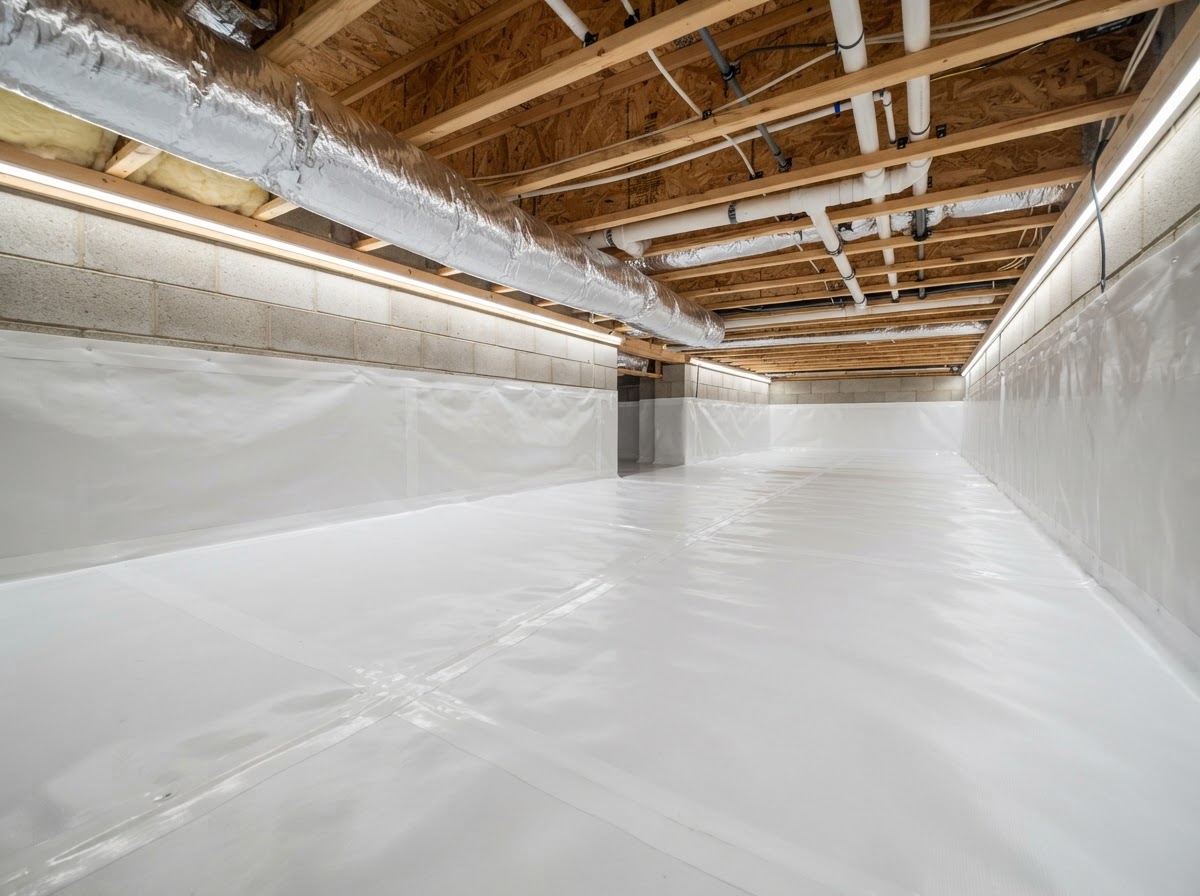
Encapsulation solves it by sealing the moisture out. The process starts with clearing the crawl space and addressing any standing water or active leaks. Then a heavy-duty vapor barrier — usually a reinforced polyethylene liner — is laid across the entire ground, sealed at the seams, and run up the foundation walls to a set height. The liner is taped and sealed at every joint, pier, and penetration, so the bare earth is completely covered and ground moisture can't get through. In most north metro homes, the installation is paired with sealing the crawl-space vents, adding insulation to the walls or rim joist, and — if needed — a dehumidifier or a small sump to manage any remaining moisture.
Here in the north metro, crawl-space moisture is driven by our clay-heavy soils and the seasonal swing from frozen winter ground to saturated spring. Snowmelt and spring rain raise the water table, and the crawl space, being the lowest point, becomes a moisture trap. Open vents, which older building codes often called for, actually make it worse in our climate, because they let humid summer air into the cool crawl space where the moisture condenses on every cool surface. Modern encapsulation closes the vents and treats the crawl space as conditioned space, which keeps it dry and stable year-round.
The payoff is real. Encapsulation drops the crawl-space humidity, which stops the musty smell at its source, protects the floor framing from rot and mold, and can noticeably reduce the humidity in the living space above. It also helps protect any mechanicals, ductwork, or plumbing that runs through the crawl space — rusting ducts and sweating pipes are common in a damp crawl space, and sealing it keeps that from happening. Some homeowners see a modest energy benefit too, because sealing and insulating the space reduces the uncontrolled air movement that drives heating and cooling costs.
After your free inspection, a contractor will tell you what's actually going on in your crawl space — whether it's moisture alone, standing water, a drainage problem, or mold that needs to be addressed first — and what encapsulation would involve for your home specifically. Not every crawl space needs the full package; some just need a vapor barrier and vent sealing, while others need drainage and a dehumidifier to stay dry. You'll get a straight recommendation and a clear quote, so you know exactly what you're paying for and why.
What this includes
- Vapor barrier seals ground moisture
- Reduces musty odors and indoor humidity
- Helps protect floors and air quality
FAQ
Crawl Space Encapsulation questions, answered
Will encapsulation stop the musty smell in my house?
In most cases, yes — the musty smell is usually ground moisture rising from an unsealed crawl space. Encapsulation covers the bare earth with a sealed vapor barrier and manages the humidity, which removes the moisture source the smell comes from. If there's existing mold, a contractor will flag that as a separate step to address first.
Should my crawl space vents be open or closed?
In our climate, closed and sealed is almost always better. Open vents let humid summer air into the cool crawl space, where the moisture condenses on every surface. Modern encapsulation seals the vents and treats the crawl space as conditioned space, which keeps it dry year-round. A contractor will tell you what's right for your specific home.
Does encapsulation include insulation?
It can. Many encapsulation projects add insulation to the crawl-space walls or rim joist, since sealing the space makes it part of the conditioned envelope. Whether you need it depends on your home and your goals. A free inspection gives you a clear recommendation on what your crawl space actually needs.
How much does crawl space encapsulation cost?
Cost depends on the size of the crawl space, how much prep is needed, whether there's standing water or mold to address, and whether insulation and a dehumidifier are included. A local contractor gives you a clear, itemized quote after your free inspection so you can see exactly what's in the scope.
Ready for your free inspection?
A local contractor will come out, look at the problem, and give you a straight, no-pressure quote. The sooner it's caught, the smaller the fix.