Foundation repair
Foundation Crack Repair in the North Metro
Cracks in your foundation walls or floor can let water in and sometimes signal settling. A local contractor repairs leaking cracks with injection that seals them from the inside — and tells you honestly when a crack needs more than a seal.
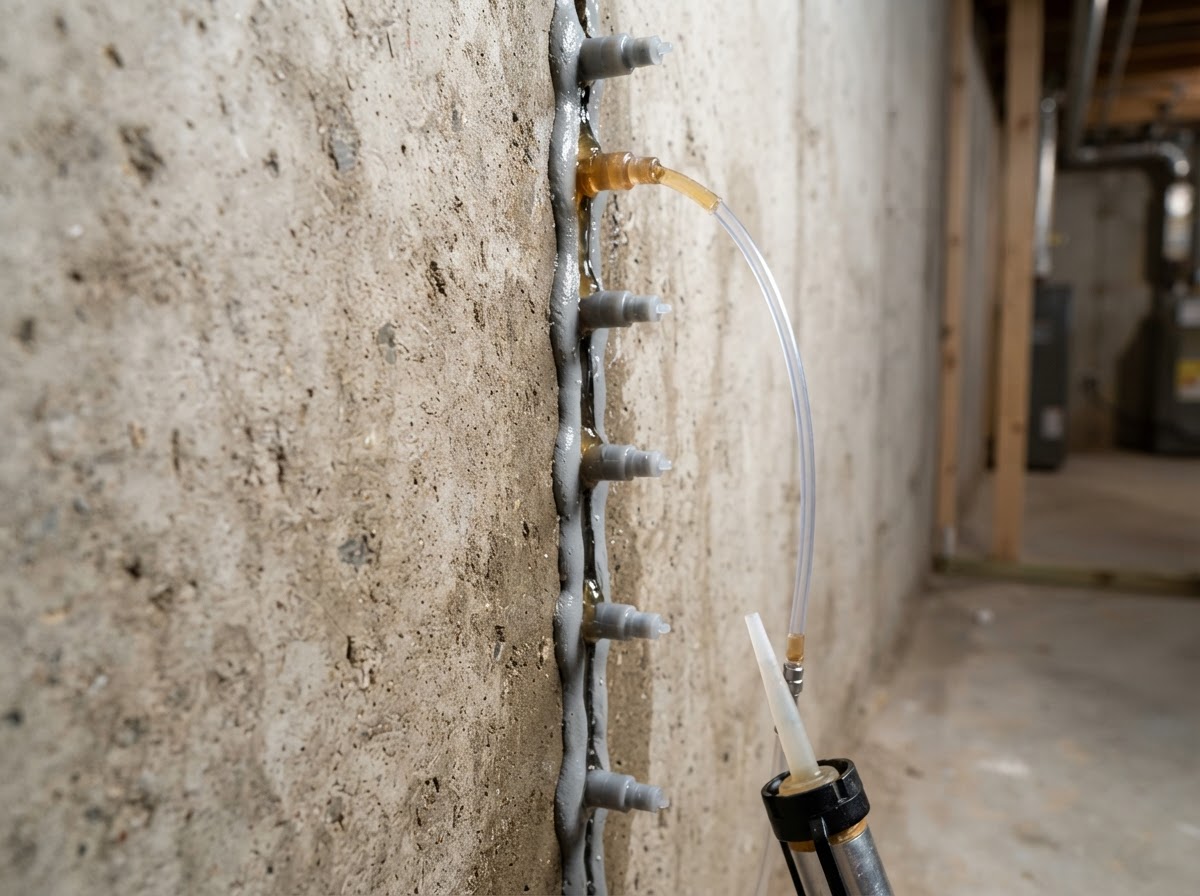
What foundation crack repair is and when you need it
Foundation cracks are one of the most common reasons north metro homeowners call for a free inspection, and they fall into two broad camps: cracks that leak and cracks that don't, and cracks that are settling or moving and cracks that aren't. Telling the difference matters, because the right repair depends on what the crack is actually doing. A hairline crack in a poured concrete wall that only shows up as a damp stripe during a heavy rain is a different problem — and a different fix — than a crack that's widening, offsetting, or letting in a steady stream of water.
For leaking cracks in poured concrete walls, the standard repair is injection — usually polyurethane or epoxy. Polyurethane foam is injected into the crack, where it expands and bonds, forming a flexible, watertight seal that can handle minor seasonal movement. Epoxy is used when you need to restore structural strength, bonding the concrete back together across a crack that's otherwise sound. Both are done from inside the basement, so there's no digging and minimal disruption. Surface ports are attached along the crack, the face is sealed, and the resin is forced in under low pressure until it fills the full depth of the crack.
Not every crack needs injection, and not every crack is just a crack. A contractor looks at the width, the pattern, whether the two sides are offset, whether the crack runs diagonally up from a corner (which can signal settlement), and whether there are other signs of movement — sticking doors, sloping floors, or cracks that line up with the one in the wall. Some hairline cracks are shrinkage from when the concrete cured and don't need anything. Others are the first visible sign that a wall is bowing or a footing is settling, and sealing the crack without addressing the cause is money down the drain.
Here in the north metro, freeze-thaw cycles are a big driver of cracking. Water finds its way into a hairline crack, freezes, expands, and widens it a little more each winter. Over a few seasons, a cosmetic crack becomes a leaking crack, and a leaking crack becomes a structural one. That's why catching cracks early — before they're actively leaking or widening — keeps a small repair from becoming a much bigger one. Spring is when most north metro homeowners first notice the damage, because that's when snowmelt and rising groundwater test every crack at once.
After your free inspection, a contractor will tell you plainly whether a crack can be sealed with injection, whether it needs monitoring, or whether there's an underlying movement problem that calls for wall bracing, drain tile, or underpinning. If injection is the right fix, it's fast, clean, and done from inside. If the crack is a symptom of something bigger, you'll know that too — and you'll know what it really takes to solve it, not just hide it.
What this includes
- Seals active leaks at the wall and floor
- Polyurethane and epoxy injection options
- Honest assessment of structural vs. cosmetic cracks
FAQ
Foundation Crack Repair questions, answered
Is every foundation crack serious?
No. Hairline shrinkage cracks from when the concrete cured are common and usually not a problem. What matters is whether a crack is leaking, widening, offsetting, or running in a pattern that signals settlement. A free inspection tells you which is which and whether any repair is actually needed.
What's the difference between polyurethane and epoxy injection?
Polyurethane foam expands to fill the crack and forms a flexible, watertight seal that tolerates minor movement — it's the go-to for active leaks. Epoxy is stronger and bonds the concrete back together for structural cracks that aren't moving much. A contractor picks the right resin based on whether the crack is leaking, structural, or both.
Can a crack be repaired from the inside, or do you have to dig outside?
Most poured-wall crack repairs are done from inside the basement with injection, so there's no excavation and minimal disruption. If the crack points to a bigger drainage or settlement problem, the contractor may recommend additional work — but the crack seal itself is usually an interior, same-day fix.
How much does foundation crack repair cost?
It depends on the length and number of cracks, the injection method, and whether the crack is a symptom of a larger issue. A local contractor gives you a clear, itemized quote after your free inspection, so you know whether you're paying for a simple seal or something more involved.
Ready for your free inspection?
A local contractor will come out, look at the problem, and give you a straight, no-pressure quote. The sooner it's caught, the smaller the fix.